A small team ships an AI agent. It works. Everyone moves on.
But what no one sees is that the agent is quietly draining two things at once.
Number one: money
Not a line item anyone budgeted — but the slow bleed of tokens, tool calls, and the occasional bad night where an agent loops and burns thousands before breakfast.
EY's 2025 Responsible AI Pulse survey of 975 executives found that roughly 99% had taken financial losses from AI-related risks, averaging US$4.4M. Most of it is invisible until it isn't.
Number two: hours
Someone still has to govern this thing — draft controls, map them to frameworks like ISO 42001, chase vendor assessments, and turn "refunds over $500 need approval" into actual code.
KPMG's 2025 global study found only 40% of workplaces actually have an organizational policy or guidance for AI use. For the ones that do, it's a manual grind. Automating it saves teams roughly 3 to 5 hours per week — hours a lean team simply does not have.
Both drains are invisible by default
Here's the uncomfortable part: you can't manage a number you can't see.
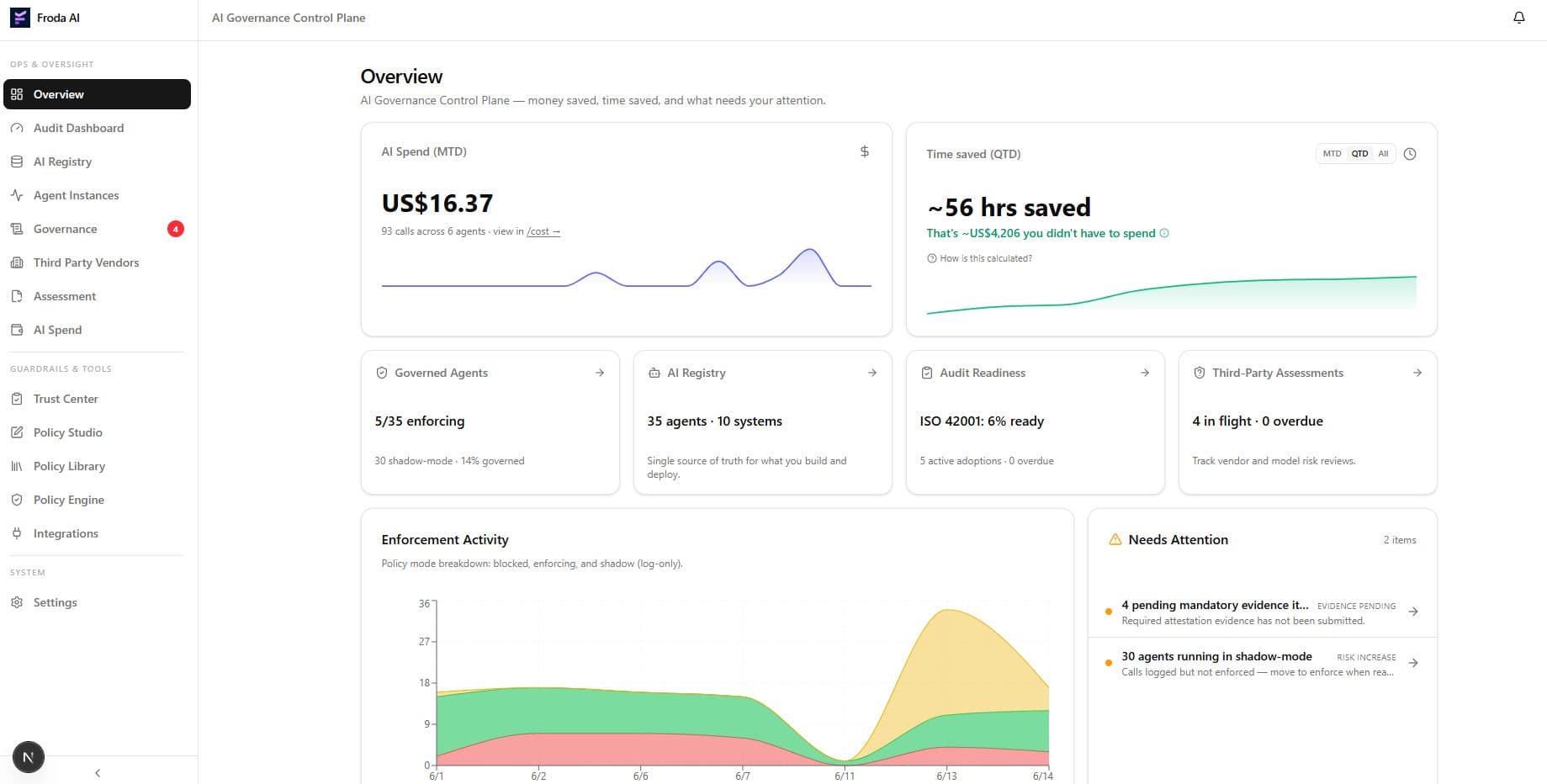
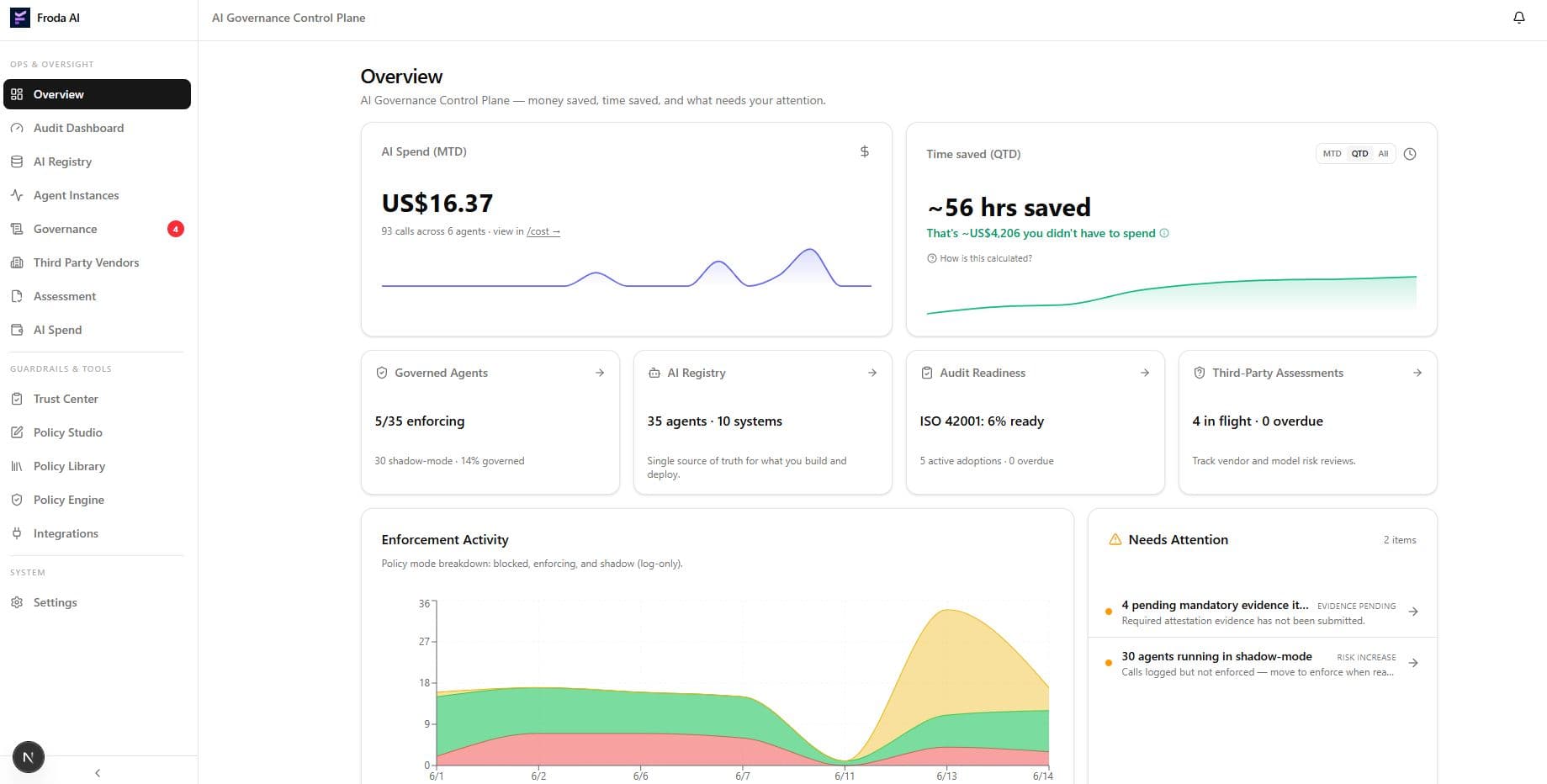
So we put them right on the screen. One view, two figures:
- Hours Saved — the governance work done for you, not by you.
- Money — what your AI actually costs (capped, so a runaway agent can't blow the budget) and the overhead you avoided.
That's the whole game for a lean team: spend you can see, and effort you get back. We built our control plane around exactly those two numbers — they're the first thing you see when you log in.
If you're running AI agents today — could you put a hard number on either one right now? Genuinely curious how other teams are tracking this.
Froda AI provides runtime governance infrastructure for autonomous AI systems — surfacing the money your AI costs and the governance hours it saves, in one view. Request a demo.