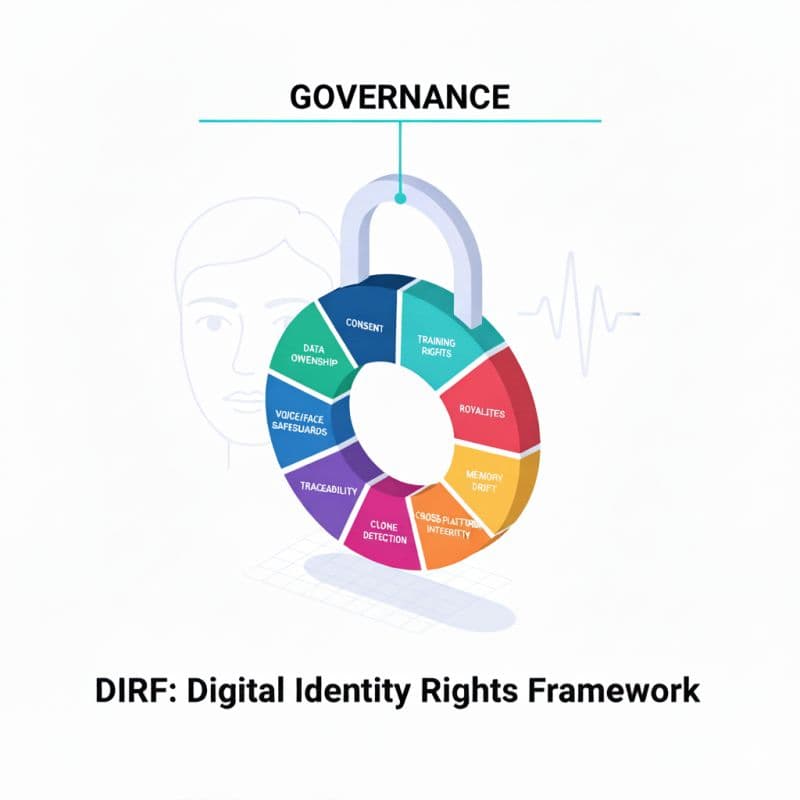
As AI systems become increasingly capable of replicating voice, face, and behavior — and even monetizing identity — the need for strong safeguards is growing. Led by Hammad A. and collaborators, this research introduces the Digital Identity Rights Framework (DIRF), a governance model that embeds consent, traceability, and royalty enforcement into agentic AI systems. It also explores key vulnerabilities and resilience strategies for AI agents. I was glad to support and contribute to this important work with other collaborators.
Key Highlights
-
63 enforceable controls across 9 domains, covering:
- Consent and clone prevention
- Behavioral data ownership
- Training and replication rights
- Voice, face, and personality safeguards
- Traceability and auditability
- Monetization and royalties
- Memory and drift control
- Cross-platform integrity
-
Evaluation metrics (CDR, CEA, MDS, RCR, TI) demonstrating significant improvements — with Consent Enforcement and Royalty Compliance increasing from near 0% to over 90% in simulations
-
A builder's toolkit including consent gateways, output traceability tags, clone-detection APIs, memory-drift monitors, and royalty ledgers and smart contracts
This work provides a strong foundation for building more secure, transparent, and responsible agentic AI systems.